
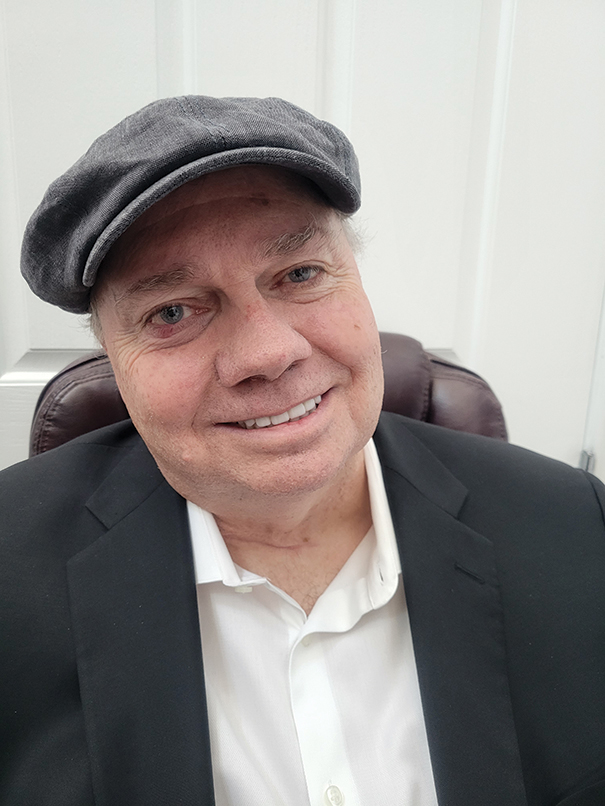
by Bob Johnson
Winston Churchill is widely credited with saying, “History is written by the victors.” While that may be an overly simplistic observation, especially today when technology enables virtually anyone with a laptop or smartphone to contribute to the narrative, it does summon memories of a time when learning about history was considered important.
At the risk of awakening my case of OFS (Old Fart Syndrome) from its recent dormancy, I’ll share that, when I went to school (yes, back in the day), teaching history was highly structured. It began in third grade when we were taught about local history, continued in fourth grade when we learned about state history, expanded in fifth grade to cover American history, and was wrapped up in a pretty bow in sixth grade when world history was covered.
I must have had good teachers because, to this day, I remember that Newport Beach was unique because it had a peninsula and eight small islands where rich people lived; the date gold was “discovered” in California (Jan. 24, 1848); how many times the American flag has been modified through the years (26!); and why we had to practice ducking under our desks.
None of this did anything to prepare me for the civics and world geography classes that followed in high school, but at least it seemed like a logical progression and provided a fair base of knowledge from which to grow and learn more.
I have no idea whether schools in the Inland Northwest follow a similar teaching path. We have neither a child nor a grandchild enrolled here. I do suspect that Washington and Idaho schools approach things somewhat differently, but it’s just a suspicion.
We know that there’s a Newport, if not a Newport Beach, here. We know that the region is more about silver than gold. But beyond that, one is left to their own devices. As adults, education is not mandatory — but it can be fulfilling, fun, and helpful in gaining a sense of place and home.
So, what does one do, where does one go, to learn about the Inland Northwest? The lovely Michelle and I have found several places.
Libraries and Bookstores. We always like to begin our book searches at brick-and-mortar sites to help ensure that they will be around for future searches.
We’ve collected books on wildflowers, hiking, and general exploring in the region. There also are multiple volumes covering Spokane and Coeur d’Alene specifically.
A word of advice: When you shop for a book on Amazon, you could spend $15 on what is essentially a 32-page pamphlet. Don’t ask me how I know this.
Museums. Take a morning or an afternoon to explore a place where history enthusiasts have invested untold hours and caffeine-fueled energy to bring local and regional history to life through exhibits, artifacts, artwork, archives and more.
Two outstanding destinations for knowledge seekers are the Northwest Museum of Arts and Culture in Spokane, and the Museum of North Idaho in Coeur d’Alene.
In Spokane, a major exhibition called “Brick by Brick: We Built This City” has been extended through June 28. One could call it the “MOC at the NMAC,” as it features “My Own Creation” LEGO designs created by fans rather than official sets.
Their creations encompass detailed scale replicas of local landmarks: the Spokesman- Review Tower; Historic Davenport Hotel; the Great Northern Clock Tower and Radio Flyer Wagon from Riverfront Park; Spokane Falls, the Monroe Street Bridge and Washington Water Works Building; the Spokane County Courthouse; the Cathedral of St. John the Evangelist, and the Campbell House.
While young and old would enjoy perusing the replicas, history buffs benefit from insights provided by the Joel E. Ferris Archives as well as photos of the landmarks. Visitors also can take advantage of a “free build” space where they can assemble their own creations and gain a feeling of artistic inadequacy.
The only thing missing from “We Built This City” is a soundtrack by Starship, but tracing that band’s lineage (Jefferson Starship, Jefferson Airplane) would require its own exhibition.
At the Museum of North Idaho, permanent exhibits focus on steamboats, the Missoula floods, the native Schitsu’umsh people, explorers and fur traders, Scandinavian settlers, mining and logging, forestry, and the “big burn.” A new temporary exhibit, “Trailblazing Women of North Idaho,” is scheduled to open on May 12 and run through Nov. 22.
It’s a relatively small museum that doesn’t take long to go through, but one can extend their stay by hiking Tubbs Hill, the trailhead of which is adjacent to the facility, and be rewarded with stunning vistas of Lake Coeur d’Alene.
History and hiking go hand-in-hand, but one should always be aware that snakes could be part of the experiences. If you’re not a fan of snakes, take comfort in the knowledge that the slithering souls are kindred spirits. Their favorite subject is hisss-tory.
Tourism Offices. These are great places to pick up guidebooks, pamphlets, and maps that point out local attractions, many of which are steeped in history.
Further, these offices often are staffed by knowledgeable locals who are happy to share their insights, favorite places to eat and shop, and so on.
Sure, one could simply go online and download some information, but there is value in holding something like a detailed map in your hands and visually connecting the dots when planning an excursion. And conversation with an actual human could open doors one might otherwise not even know existed.
Historic Markers. One of the things we absolutely love about the Inland Northwest is the plethora of historic markers planted alongside the highways and byways. Every chance we get, we stop to read these informative placards and, often, take a picture of what’s being described in the distance.
It takes a little explaining for you to understand our giddiness over the markers. We come from a state that had lots of road signs indicating there’d be a historic marker at a specific exit, but when we’d follow the signs to the alleged site, there’d be nothing. It was as if we were victims of a never-ending game of “Gotcha.”
Here, the road signs don’t lie, and the markers are informative and interesting.
Restaurants and Bars. For those with a hunger for history and a thirst for knowledge, visiting a venerable dining and/or drinking destination can be a fulfilling (and filling) experience.
In Spokane, the Park Inn Bar & Grill, which opened in 1932, can both sate and quench. In North Idaho, The Snake Pit in Enaville can do the same. Its history is less clear, although its website suggests its origins can be traced to 1879.
Something you need to know about both places is they’re not fancy. But the food is tasty and the beer is cold, and with warmer weather beckoning, isn’t that all that really matters?
Old-timers. In American society, we do not revere our elders as they do in Japan and other countries. Too often, we don’t even respect them. When we ignore them, we miss out, not only on the wisdom acquired over a lifetime of experiences, but also on oral histories that only people who have been there and done that can provide.
We also miss out on a lot of laughter. When my folks were living out their years in an assisted living facility near my brother’s home in Oregon, our dad met a fellow jokester. While Dad specialized in bad puns and jokes — something he passed on genetically to me — his friend specialized in old-man jokes.
Some would be considered in poor taste for a general audience but were perfectly fine for the specific environs — especially since it was an elderly gentleman telling them. I’ll share a few that would have garnered a G-rating regardless of venue.
Why do elderly men love English muffins? Because of the nooks and grannies.
Why should you marry someone older than you? As your looks fade, so will their eyesight.
Why is the moon like dentures? Both come out at night.
Now, before you fire off an angry letter to the editor, please know that I heard my dad’s buddy tell these jokes in the assisted living facility’s dining room, and everyone who could hear them laughed.
This gentleman also told some riveting stories from his time in the Army during World War II — stories they don’t teach in any history class at any grade level that I’m aware of.
Those conversations, over a handful of years, taught me that there’s much to be learned about any topic and any place. But you must be willing to seek out the information, sometimes in places beyond the obvious.
Award-winning writer Bob Johnson and his award-winning photographer-wife, Michelle, enjoy exploring the Inland Northwest and sharing their experiences with Huckleberry Press readers.
