
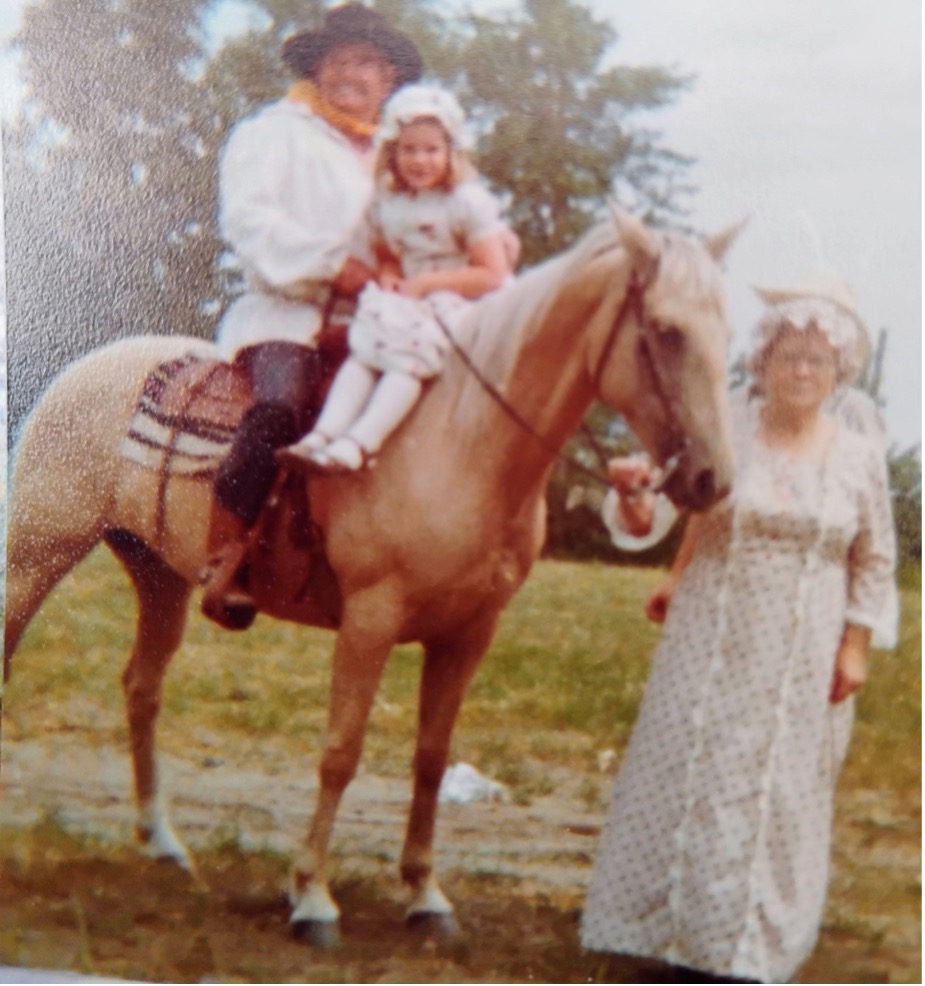
Me at age 7 with my “famous” grandpa, Marshall Estes, and Grandma Iva Estes of Northport, Wash., July 4, 1976.
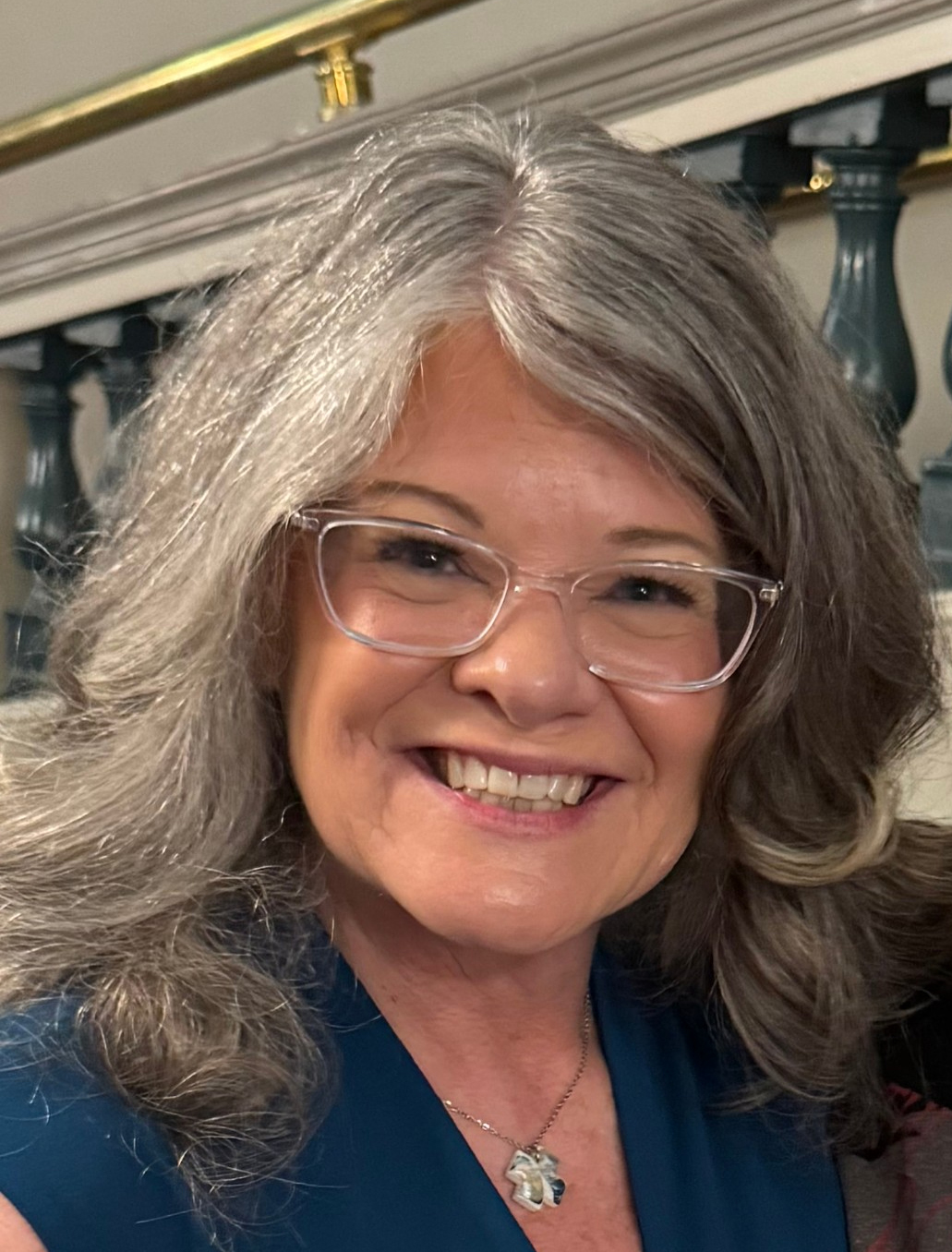
By Amy McGarry
Two-hundred and fifty years old already? Feels like just yesterday we were celebrating your 200th birthday. Yes, hard to believe that I’m old enough to remember when the USA was only 200. That birthday was, of course, famous as the 1976 bicentennial, which is so much easier to say than the semiquincentennial. Because I’m an English teacher, please humor me as I nerd out on the fun Latin origins of semiquincentennial.
“Semi-” means half.
“Quincent-” derives from “quingenti,” meaning five hundred.
“-ennial” comes from “annus,” meaning year.
Together, “semiquincentennial” refers to a celebration of 250 years, or half of 500 years.
The simpler bicentennial breaks down like this:
“Bi-” is a prefix meaning “two.”
“Cent” comes from “centum,” which means “hundred” in Latin.
The suffix “-ennial” is derived from “annus,” meaning “year.”
Together, “bicentennial” refers to a period of 200 years.
We do love our round numbers. When I turned 50 years old, I threw myself an epic karaoke birthday party, because 50 was special. Not once did I ask myself why 50 was so special. As we celebrate America’s 250th birthday, with much hullabaloo (purely an English word, no Latin breakdown), I began to wonder, what’s the big deal with the number 50? I mean, it’s just another number. Or is it…?
I started to research the reasons behind the significance of celebrating rounded numbers. We also like halves. Thus, I went so far down the rabbit hole of “Jubilee,” my eyes crossed and my head started spinning. I will get you started with an answer, then allow you the independence to explore more on your own. You know, in honor of Independence Day.
According to Science Insights online, “The original concept of the Jubilee is detailed within the Hebrew Bible, primarily in the Book of Leviticus, chapter 25. This religious law established a system where a Jubilee year was observed every fiftieth year, following seven cycles of the Sabbatical year.”
It gets complicated after that. So, let’s get back to our country’s birthday celebration.
I was only seven years old for the bicentennial of 1976, but I remember that as an epic celebration on par with my 50th karaoke birthday party. I remember that particular 4th of July fondly, for my family traveled from Spokane to Stevens County and the town of Northport (population 294) to join in its bicentennial celebration. My grandpa, Estes, was to ride his horse in the parade, which, at that time, was exciting and made me proud. I was sure this meant he was famous. My mother even sewed me a colonial dress and bonnet to match my Grandma Estes.
It’s funny what stands out in a child’s memory. I don’t remember watching the parade with my famous grandpa at all. But I vividly remember a greased pole that the strong and brave could try to climb for a prize. I wanted to try to climb that pole, but it would make a mess of my handmade dress. I also remember a big sandbox with coins hidden in the sand. This was designed for toddlers to find “buried treasure.” I remember my older brother suggesting we should say I was 4 years old and throw me in there and “clean up” on the coins. Once I heard that, I couldn’t let go of the idea and was sorely disappointed when I realized it was only a joke, and no one would believe I was only 4 next to all the toddlers in there. No coins for me. And no prize for the greased pole. I remember a log sawing competition where partners using a two-person saw competed to see who could cut their log fastest. But that might be a memory from watching “Little House on the Prairie,” my favorite show at the time.
I researched the internet in hopes of finding an old news article from July 1976 that might give details about that bicentennial celebration in Northport. While I found some information about how the bicentennial was celebrated in Philadelphia, Boston, and Washington, D.C., I didn’t find anything about Northport’s celebration. Not even my famous grandpa’s name in the newspaper for being in the parade.
Now, in the year 2026, this month’s semiquincentennial celebration makes me feel sentimental. (Try saying “sentimental semiquincentennial” five times fast.) I remember learning to sing “America the Beautiful” before school let out for the summer. To help us learn the words, the music teacher had a beautifully illustrated picture book that showed spacious skies, purple mountains, and fruit trees. The image of the amber waves of grain was especially significant to me as we moved from Spokane to wheat-farming country outside of Ritzville that summer. It’s the first I remember amber waves of grain. That book, that song, and that music teacher also instilled in me the pride I still have in such an awe-inspiring, beautiful country that is the United States of America.
“America the Beautiful” is still my favorite patriotic song. After extolling the natural wonders that are the beauty of our America, it reflects on our history and the sacrifices made for our “life, liberty, and pursuit of happiness.” My favorite line, however, is in the second stanza,
“America! America!
God shed His grace on thee,
And crown thy good with brotherhood
From sea to shining sea!”
What better gift for a 250th birthday.”
Amy McGarry grew up in Spokane Valley, Washington. After a 20 year hiatus, she moved back to Spokane Valley where she lives with her husband, daughter and two cats. She is the author of I am Farang: Adventures of a Peace Corps Volunteer in Thailand, available on Amazon. com.
