
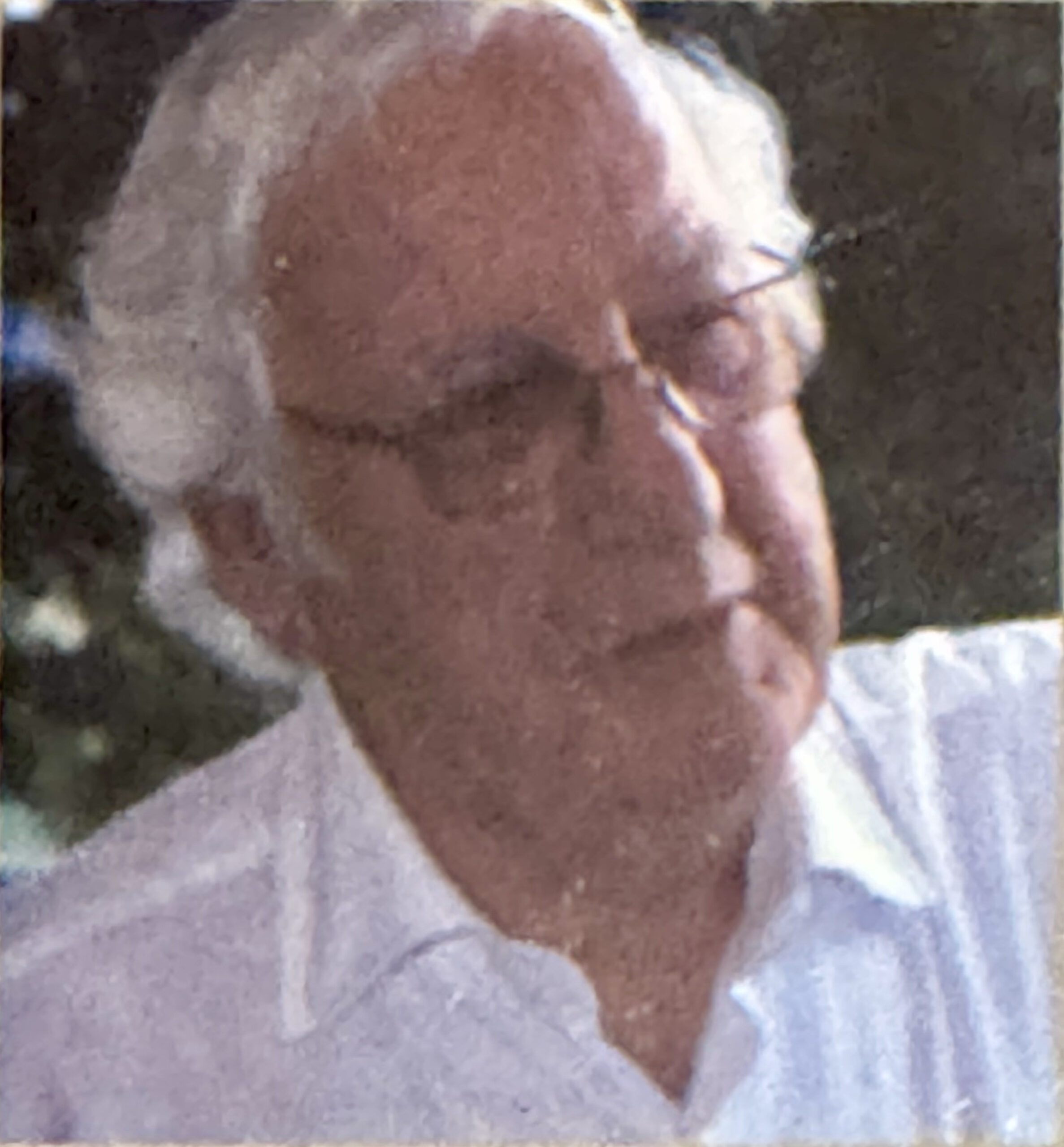
Ray Bilderback
Chances are you have a favorite vehicle in your life. Maybe you have memories of the radio croaking out a tune while you and your father sing along. I have such a memory, and as a bonus, we were heading out for a bit of fishing.
But my favorite ride was not quite a truck. It was a puddle jumper. It was a conglomeration, a mix and match collection of Model A Ford parts-28, 29, and 30. It had 17-inch tires on the front and 16-inch knobbies on the back. It was our fishing rig and take-my-brothers-to-the-swimming-pool rig. It was not equipped for highway use, but it got to use the highway on weekend trips into the mountains. It just didn’t have a top or fenders (or seatbelts, doors, a radio, a heater, or air conditioning). Too much fuss, those things.
I got to sit in the front while Dad drove. My two brothers reclined in the back with the sleeping bags, tent, and fishing gear. At the top of a steep grade, it would overheat and we would give it a chance to cool, then replenish the radiator with water from a canvas bag looped over the front bumper. Dad would add half of a sack of Bull Durham tobacco. The tobacco would circulate, swell up and fill those little leaks in the radiator.
An hour or so off the highway, we were pitching our tent at a mountain lake. Those were good years and the little jalopy played an important role in them.
If my dad were to choose his favorite vehicle, it might be the Reo with hard-rubber tires (that’s right, no balloon tires on that truck). It was his favorite because driving it was his first paying job.
Skip a bunch of decades if you will. I was working with my father-in-law on his cattle ranch near Sprague, Wash. He had a ’46 Chevy pickup equipped with duals and a diamond-plated deck instead of the regular pickup back. It had slots at the sides to accommodate racks which we usually left off because the Chevy’s main job was to haul hay in the winter, fencing stuff in the summer, and whatever in between.
He bought it new in ’46. During the war years, he got by with a ’37 Dodge converted into a “trap wagon” (during the war, new trucks, tires and so on were not available; tanks and jeeps were what they made and those went to the war effort).
One summer afternoon, we worked cattle in the morning and were missing a heifer. We went looking for her in the Chevy. Joe drove so I got to open a pair of gates and close them (if it’s closed, leave it closed, if it’s open, leave it open). We were following a dusty, rutted track into the back pasture. About 10 minutes into the trip, Joe left the road choosing to plummet down into the big sage brush. I hung on.
In a bit, I asked him what I thought was a reasonable question: “Why had we left the road?”
He said, “There’s a road here, I’ve been down it before.”
We’d been lurching over rocks and sagebrush. One such lurch bounced us heavily to my side and didn’t come back up. I looked up. One of the dual tires was passing the front of the Chevy!
“Joe, better stop. I think we’ve lost a tire.”
The truck was canted heavily to my side and my door was jammed against a large sagebrush. I had a hard time of it getting out of the rig. Meanwhile, the tire was bounding down the slope. Fortunately, it wobbled, ran into a big sagebrush and flopped on its side. I had to carry it only about 50 yards or so back to the truck.
While Joe jacked up the rig, I hunted for lug nuts on the sagebrush hillside. Tracking back the way we’d come, I found the other tire but as for lug nuts, I couldn’t find a one. We borrowed one here and there from the other wheels and limped home. Next morning, the heifer was back with the herd.
Joe refrained from cussing or kicking the tires, which a lesser man might have done. We agreed that it simply wasn’t the Chevy’s fault and, looking on the bright side, we hadn’t run into anybody or injured the truck. Good old truck.
That winter, Joe and Esther went on a cattleman’s tour to Fiji, Australia, and the like and I fed the stock while they were gone. Naturally, we got a patch of miserable weather. One morning, I got a late start. I had to shovel the driveway and feed my own stock. Once at the barn, before I could load the faithful truck with hay, I had to break the ice off the water tank, start the pump, fill the tank with water, and feed the stock at the barn. I had been getting vocal reminders that lunch was late and they had not had breakfast either.
I ate an oatmeal cookie and had a cup of coffee while I drove the half mile to another pasture and another set of hungry cows. I had an hour left of daylight by that time. The feeding went smoothly, there were no cows missing and the cows seemed happy. A half-an-hour ’til dark.
But I had made a mistake. Do you remember “To Build a Fire,” that short story by Jack London? In it, the young man left the cabin in minus-60-degree weather. He decided to travel somewhere against the advice of wiser men. Walking beside a frozen stream, he plunged into a spring-fed hole and got wet to his waist. He managed to stay calm, started a fire, and began to dry out. But he built his fire under a snow-laden bough. The bough warmed up and dumped its load of snow on his fire. The cold got to him before he could make a second fire.
My mistake? The little truck had good traction as long as it had a load of hay. But I fed the hay to the cows and lost some of my traction. Usually, I would just get a good run at it and bounce onto the county road. Simple enough, but I had fed the cows too close to the gate. That was my mistake. Try as I might, with cows in the way, I couldn’t get a good run at the slight slope that led to the county road. The little truck made several valiant tries at the slope, but I had come perilously close to sliding into the ditch and getting really stuck.
It was now 15 minutes ’til dark and the wind was whipping the snow along the road waist high. We were in a whiteout.
The truck had chains. But that would take time and what if it didn’t work? I turned the truck’s lights off and started walking. I tried walking into the wind, but I couldn’t get a good breath. The wind was stealing it. I walked backward to the truck, turned left and, the wind at my side, made better time. About a half-an-hour later, using memory and glimpses of the neighbor’s outside light to guide me, I found their driveway. By the time I got to their house, I was cold on all corners.
No lights in the living room; they were not home. Focus.
I tried the back door and, true to farming custom, they had left the kitchen door unlocked. Inside the kitchen, I found the Sunset Telephone Company land line was working (no cell phones at that time) and my rescue was underway.
Next morning, my wife drove me to the pasture and the little truck started right up. No cows in the way, the Chevy pulled onto the county road on the first try. Good truck.
Midway through the ’70s, the little Chevy, having served faithfully for a solid 40 years, was replaced with a new, long- bed Dodge pickup that had seatbelts and four-wheel drive. Fancy stuff, but no electric windup windows, no power steering, and no air conditioning. We affectionately named it “The Blue Goose” and it soon gained fame as a workhorse: It was late spring and hay was in short supply. We got news of a load of good alfalfa hay that had been barn-stored. It was a 50-mile round-trip, so fuel was a concern, but we needed hay. We decided to get as many 80-pound bales as possible on the Blue Goose and not make a return trip.
No problem. Joe figured out a way to get 53 bales on the pickup. Forever after in our family, it was known as a “Joe T. load.” To this day, every once in a while, we see a cleverly-loaded truck and declare, “That’s a Joe T. load!”
Good, honest truck.
Ray Bilderback, creator of the Reuben Braddock novels, was born and raised in the Sierra foothills of California. He served in the U.S. Navy Seabees during the Korean War and taught for many years in the West. He makes his home in the mountains of eastern Washington with his archeologist wife, Madilane Perry. “In the 1930s and 1940s, where I lived, we still used horses and hand tools, canned and preserved what we grew or raised, lit our kerosene lanterns, stoked our woodstoves. In my writing, I draw from those times like water from a sweet well.”
