
Robin Milligan
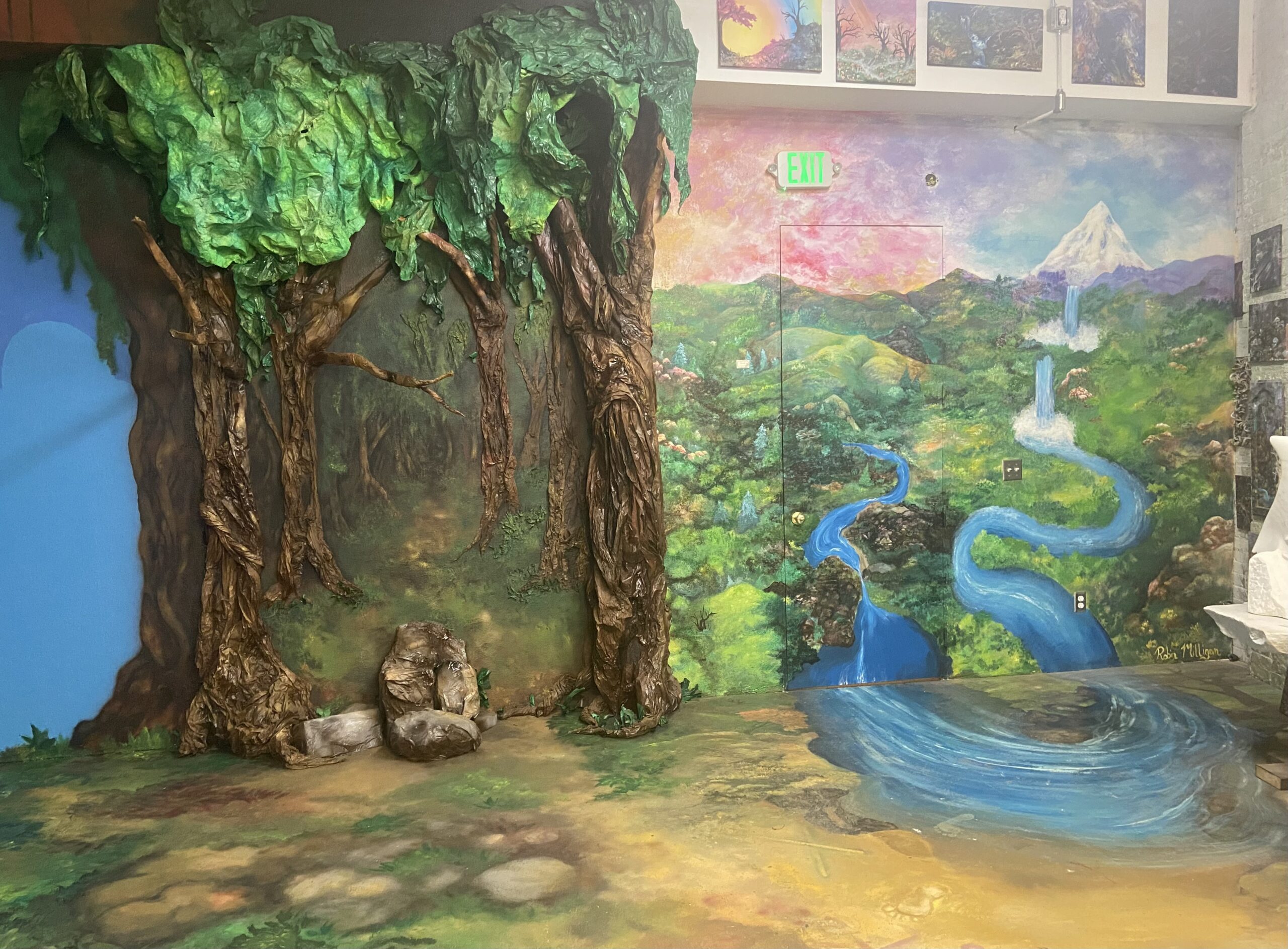
Mural and photo of mural by Robin M. Milligan.
A mural can be more than decoration. For many businesses, it serves as a visual landmark that shapes how customers experience a storefront and remember a location.
According to Americans for the Arts and the Project for Public Spaces, murals help transform blank walls into focal points that invite foot traffic, encourage photography and contribute to a sense of place. Studies cited by the organizations show murals are often among the most recognizable and widely shared elements of a business’s brand.
Unlike temporary signage or digital advertising, murals offer long-term visibility. Once installed, a mural can remain in place for years, working continuously without recurring advertising costs, according to the Outdoor Advertising Association of America and Americans for the Arts.
Behind the finished artwork is extensive planning and skilled labor. Professional muralists typically begin with evaluating wall conditions, preparing surfaces and designing work that fits both the building and its surroundings, according to contractor guides from Fixr and HomeGuide. Exterior murals require specialized primers, paints and sealants to withstand weather, sun exposure and temperature changes.
The work itself can be physically demanding. Muralists often spend long hours on ladders or lifts, working outdoors in varying conditions while maintaining precision and focus, according to occupational safety guidance from OSHA and arts industry reports.
Pricing reflects the time and expertise involved. Industry sources such as Fixr, HomeGuide and California Mural Arts report that professional muralists commonly charge between $20 and $50 per square foot, with highly detailed or technically complex projects ranging from $50 to $100 or more per square foot. A 100-square-foot mural can represent a $3,000 to $5,000 investment, depending on design complexity, surface condition and access.
Most of the cost goes toward labor, with remaining expenses covering materials, equipment, preparation and design. When calculated by hours worked, professional mural pricing aligns with other skilled trades, according to Fixr and data from the U.S. Bureau of Labor Statistics.
Arts advocacy organizations note that muralists and other visual artists often face pressure to work without pay or for “exposure.” Americans for the Arts, Artists U and Creative Workers Bill of Rights initiatives have documented unpaid labor as a persistent issue in public-facing art, including murals. Advocacy groups emphasize that creative labor should be compensated in the same manner as other professional services.
Despite these challenges, research suggests murals provide measurable benefits. Studies on placemaking and visual marketing indicate that murals can increase foot traffic, strengthen brand recognition and encourage customer engagement. The Outdoor Advertising Association of America has found large-scale visual installations tend to outperform traditional advertisements in recall and attention.
Murals also contribute to neighborhood identity. Communities that invest in public art often report stronger local economies, increased tourism and higher levels of community pride, according to Americans for the Arts and the National Endowment for the Arts.
Businesses commissioning murals typically work under formal agreements outlining design, materials, timelines and payment schedules. Deposits ranging from 30% to 50% are common and help secure materials and schedules, particularly for projects affected by weather and access constraints.
For many business owners, a mural represents both an aesthetic choice and a long-term investment. When professionally executed, murals can differentiate a business, enhance public spaces and signal a commitment to the surrounding community.
Robin Milligan is an artist and entrepreneur living in Spokane. She curates art shows, runs an IT company, and teaches ceramics and painting from her home studio. When not working, Robin spends her time with her three children exploring nature, rockhounding, making art, and swimming.
