
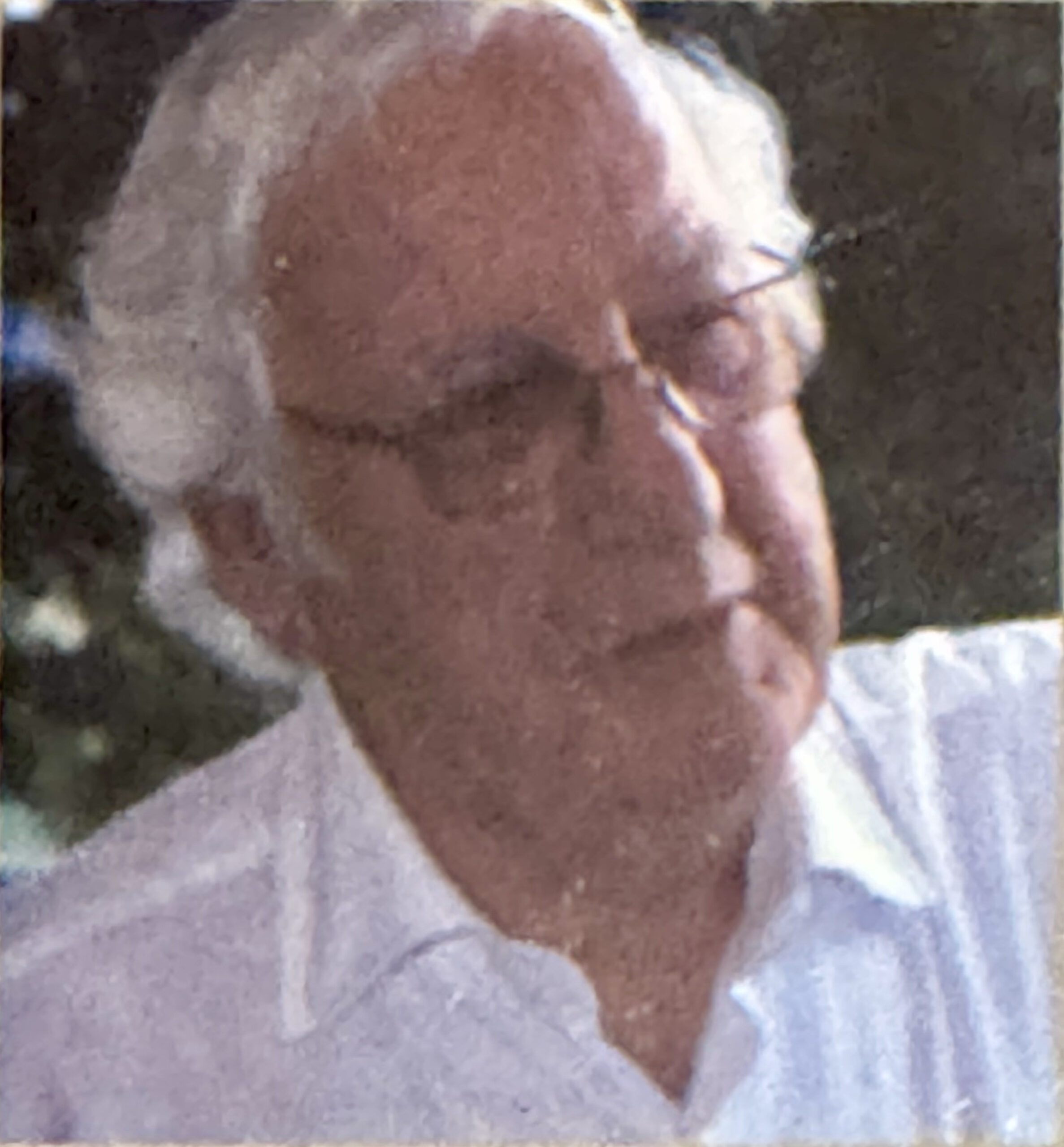
Ray Bilderback
I like small towns. You get to know everybody and, of course, they know you. Unless you poach deer or salmon, steal your neighbor’s watermelons or siphon his gas, townspeople are pretty proud of their young people. They might even be disposed to brag about you on occasion.
I tried to stay respectable, I really did. But I had finished high school and there comes a time to move on before they forget your good points. About that time, our government sent troops to intervene in the struggle in Korea. The draft board in our region began to run out of likely picks and noticed my name. A buddy in the neighboring town got nervous about the time I did and there was a rumor circulating that the draft board was drafting into the Marine Corps. It is an honorable outfit to be sure, but they had too many casualties for my liking.
Next thing I knew, we were standing in front of two recruiting offices in Sacramento. Bob wanted the Air Force, I wanted the Navy (I’d heard about the Seabees). We flipped a coin to see which boot camp we’d attend and I won (if you can claim a win in our situation).
Off to boot camp in San Diego we went for eleven weeks of training. While there, I qualified for NAVCAD so the Navy got busy repairing my teeth (for that I am ever grateful). I took a test with 89 other recruits and passed three of the four categories (you had to be in the top 45 to get a pass) but failed to place in English. I couldn’t believe it. I passed in math and physics but not English?
About that time, the carrier Philippine Seas came back to Pearl Harbor missing half its planes and a third of the pilots. Once again, I didn’t like the odds. I chose Builder School in Port Hueneme (pronounced wy neem ee), California and Bob went straight into the fleet on a minesweeper. Did he ever forgive me?
Hawaii
After Builder School, I got orders for Kwajelein Island in the South Pacific. Before going I spent two weeks at my grandmother’s farm and visited with my father and brothers.
Time flew by. In the spring of 1953, I reported to Treasure Island and two days later I was headed to Hawaii on a troop ship.
Just a few hours after we crossed under the Golden Gate Bridge in San Francisco Bay, we ran into foul weather and rough seas. Imagine getting seasick on a crowded troop ship. Miserable, right? Now imagine being among the one third that didn’t get sick. That’s right. You take care of the two thirds who did get sick. Mangano, a friend from Builder School, was one of the very sickest. More on that in a little while.
Seven days later, we debarked in Hawaii and were assigned to Special Services for a few days. The clerk winked at us and gave us a three-day pass. Just check in at 0800 every morning. Wow. Hawaii. I looked up a second cousin, Dick Dobbins, who was stationed there. He got a day of liberty and took us around the island. “Us” included Manke, also of Builder School. We loaded up on picnic supplies and headed out in Dick’s Model A for an unforgettable day.
After that, Manke, Mangano and I were all headed for the Naval Air Base on Kwajelein Island. Manke and I were scheduled to fly but Mangano, who had been so ill on the ship, was to go by ship again! Manke and I volunteered to take the ship. Mangano gets so sick. He said that one time he took his girlfriend fishing in Brooklyn Bay and she had to put him on an island and do the fishing herself. WE LAUGHED BUT IT WASN’T FUNNY.
Right there we learned something about the Navy. They can be so understanding (giving us no-duty days), but orders from headquarters are not changed. Mangano arrived on Kwaj three weeks later than we did and he had to recover in the sick bay. They had nearly lost him due to dehydration and, let’s face it, unreasonable fidelity to orders.
Part Two
Stepping out of an airplane onto the concrete runway on Kwaj is an experience in itself. It’s like opening the door of your oven, only you walk away and the oven goes with you. And you do that carrying your seabag with all you own in it.
I reported to the Master at Arms in the barracks office. He anticipated my arrival and assigned me to the head (privy, bathroom, etc.) on the second deck. (Don’t you dare call it the second floor. How long you been in the Navy, anyhow?) There is no answer to such a question.
It should have been an easy job, but I soon discovered that the floor, oops, deck, had no drainage. The shower room did, but not the main deck where the washbasins, urinals and pots were. The next thing I learned was that urine and coral-laden sea water promptly form a deposit which clogs up the urinals and they flood the flo- deck. I attacked the mess with a dustpan and a small squeegee.
I’d like to backtrack a little. When I got off the airplane, there was a strange group waiting to see who had arrived at their island. They didn’t greet us, welcome aboard and that sort of stuff. As I remember it, they just stood there. After I had been on the island a while, I began to understand them, I guess. There were few diversions on such a small island and they just wanted an event.
There were about 3,000 of us on the island that was kidney-shaped, less than two miles long and, in places, a half mile wide. It was an average seven feet above sea level and seven degrees above the equator. It had a nine-month rainy season and a three-month drought. If you expected spring, fall and winter, forget it. Summer was what you got.
The airstrip took up nearly half of the island, so things were a bit crowded in places and eerily and unexpectedly lonely in others. One side of the strip was uninhabited and the far end of the island had a small Japanese cemetery.
Germany had a presence in the Marshall Islands until the mid-1930s. On a clear day you could see a German warship that had gone aground at the other end of the lagoon. Later the Japanese came. They built a railroad that operated at low tide connecting some of the little islands in that group. They also brought venereal disease that almost destroyed the Marshallese colony that lived there. When I was there in ’53, the neighboring Ebeye island had a huge gap in their population. Penicillin and our Navy doctors and nurses restored their fertility and not a bit too soon because the Marshallese ladies were getting past child-bearing age.
I finished my stint on barracks duty and (finally) was sent to the carpenter shop where I hooked up with Carberry from Rhode Island. He knew a bit about concrete and masonry (we called it coralcrete).
About that time, there was a crisis in headquarters. They installed a new safe and then accidentally locked the combination to the safe inside. A search of Manke’s records revealed a talent: He could open safes! Seabees to the rescue. Fast on the heels of that escapade, Mangano was called upon to line the island’s only baking ovens with new firebricks.
I made friends with a pair of native workers, Aaron and Ronnie. Aaron had never left the islands but could speak German, Japanese and English as well as his native tongue. He was adaptable, you might say.
Ronnie was a different matter. Yes, he knew a language or three, but he was from Ponape and was some sort of royalty there. He wanted to hold hands. I had to explain that men don’t hold hands in my culture and especially not when you are a mighty Seabee.
One day Ronnie told me he would be gone home for a while. He was taking two weeks of vacation. I was puzzled: the inter-island trader had just been to Ebeye (you could get a ride on it) and wouldn’t be back for a month and Ponape, Ronnie’s home island, was about 650 miles away!
“I have my boat, outrigger.”
“Yes, but Ponape is hundreds of miles…” I trailed off.
“Takes a day-and-a-half.”
I learned later that those islanders navigated by stars and by the shape of the waves as they passed a given island (each island shaped the waves a bit differently).
Life went on: We poured a bit of coralcrete and played a bit of softball. One day I had the late afternoon watch. Not much to it on Kwaj as a rule, but this watch was different. I was called to the Ebeye side of the island. There we helped a terrified pair of sailors out of the surf. The tide was at the full and a four-foot wall of water was surging into the lagoon from the open ocean. The guy I helped ashore told me, between gasps for breath, that big fish coming into the lagoon kept bumping into his legs. Twice he’d been knocked down. I helped him to his rack in the barracks.
Eventually the full story came out. The pair had walked at low tide to Ebeye searching for a romantic interlude with a native girl. There had been reports of many girls (not true). They were met by a trio of young men who said they were having a birthday party. Would they like to attend? The party involved jugaroo (fermented coconut milk), a song or two and a machete dance. The party lasted long enough for the tide to start filling the lagoon.
By lights out, the story had made the rounds at least twice and nobody showed interest in repeating the adventure.
Then came Thanksgiving. We were to have the works topped off with pumpkin pie. The cooks started in the wee hours to roast the ninety or so turkeys necessary to feed about 2,500 men. At 11 a.m. the carving had begun and we were looking forward to a feed at 12:30. At 11:30, all hands were put on alert and soon every plane on the island was in the air. All personnel that couldn’t get in a plane were crowded onto the second floor (deck!) of the barracks. We were in the path of a tsunami. And remember, the island averages just seven feet above sea level.
The cooks were understandably furious, even livid. And then, after the food had cooled and been warmed a couple of times, the tsunami went somewhere else.
Disaster
Earlier I mentioned a trading boat that made regular visits to Ebeye island. The islanders sold their copra (the dried meat of the coconut) and bought items from the trader. Islanders had gathered coconuts and fished to sustain their people for thousands of years before the outside world intervened.
That was all about to change. One day in March of 1954, word got around that if we got up early the next morning, we could view an experiment. They set off a hydrogen bomb that made Eniwetak Atoll and Bikini Atoll uninhabitable for thousands of years and scattered radioactive debris across an estimated 50,000 square miles (data from National Geographic, March 1986).
They had moved the Bikini islanders about 30 miles to another island, but the wind changed and the Bikini people received massive doses of radiation. They brought them to Kwaj and made twice daily inspections, but the damage had been done.
We were asked not to bother them, but my work took me past their compound. I remember them in a circle playing hackiesak with a wad of coconut husk and singing. Even now, so many decades later, I hate to think of it. We destroyed their way of living. Destroyed their home.
And Ebeye? Today it has 13,000 people living on 80 acres. Kwaj? It is a missile site. The Bikini islanders? They were moved to an island that had no lagoon and is surrounded by rough seas. No chance to resume traditional ways.
Ray Bilderback, creator of the Reuben Braddock novels, was born and raised in the Sierra foothills of California. He served in the U.S. Navy Seabees during the Korean War and taught for many years in the west. He makes his home in the mountains of eastern Washington with his archeologist wife, Madilane Perry. “In the 1930s and 1940s, where I lived, we still used horses and hand tools, canned and preserved what we grew or raised, lit our kerosene lanterns, stoked our woodstoves. In my writing, I draw from those times like water from a sweet well.”